3 Ways to Assess Your Weight Beyond the Scale
When it comes to understanding your body and your health, the number on the scale is just one piece of the puzzle. While it can be a quick indicator, it doesn't tell the whole story about your body composition or overall well-being. So, how else can you assess your weight and progress? Here are three effective methods that go beyond the traditional bathroom scale.
1. Body Mass Index (BMI)
The Body Mass Index is a widely used screening tool that calculates your weight in relation to your height. It's a simple formula that provides a general category for your weight status: underweight, normal weight, overweight, or obese.
How it's calculated:
BMI = $\frac{\text{weight (kg)}}{\text{height (m)}^2}$ or BMI = $\frac{\text{weight (lb)}}{\text{height (in)}^2} \times 703$
Why it's useful:
BMI offers a quick and easy way to screen for potential weight-related health risks for a large population. It's a good starting point for discussions with your doctor about your health goals.
Limitations:
It's important to remember that BMI doesn't differentiate between muscle and fat. This means athletes or individuals with a high muscle mass might have a high BMI but a healthy body fat percentage. Conversely, someone with a "normal" BMI could still have a high body fat percentage and low muscle mass, often referred to as "skinny fat."
2. Waist Circumference
Measuring your waist circumference is a simple, yet powerful indicator of abdominal fat, which is often associated with a higher risk of health problems like heart disease, type 2 diabetes, and certain cancers. Fat stored around your midsection (visceral fat) is metabolically more active and poses a greater health risk than fat stored elsewhere.
How to measure:
- Stand upright and breathe out normally.
- Place a measuring tape around your bare abdomen, just above your hip bones.
- Make sure the tape is snug but not compressing your skin, and is parallel to the floor.
What the numbers mean (general guidelines):
- For women: A waist circumference greater than 35 inches (89 cm) is generally considered to be at increased risk.
- For men: A waist circumference greater than 40 inches (102 cm) is generally considered to be at increased risk.
Why it's useful:
Waist circumference provides a more direct assessment of health risk associated with central obesity, regardless of your BMI. It's a practical and inexpensive measurement you can easily do at home.
3. Skinfold Measures
Skinfold measures, also known as skinfold calipers, are a method used to estimate body fat percentage by measuring the thickness of subcutaneous fat (fat just beneath the skin) at specific locations on the body.
How it's done:
- A trained professional uses a caliper to pinch and measure the thickness of skinfolds at various sites. Common sites include the triceps, biceps, subscapular (below the shoulder blade), and suprailiac (above the hip bone).
- Measurements from these sites are then plugged into equations to estimate overall body fat percentage. Different equations exist, some more complex than others, and the accuracy can vary depending on the skill of the person taking the measurements and the equation used.
Why it's useful:
Skinfold measures can provide a relatively quick and inexpensive estimate of body fat percentage. When performed consistently by a trained professional, it can be a useful tool for tracking changes in body composition over time.
Limitations:
The accuracy of skinfold measurements depends heavily on the skill of the person taking the measurements. It also assumes that subcutaneous fat is a consistent proportion of total body fat, which may not be true for all individuals.
Ultimately, the best way to assess your weight and health is by using a combination of these methods and, most importantly, by consulting with a healthcare professional. They can help you interpret the results in the context of your individual health history, lifestyle, and goals, guiding you towards a healthier you. Remember, health is about much more than a number on the scale – it's about how you feel, your energy levels, and your overall well-being.
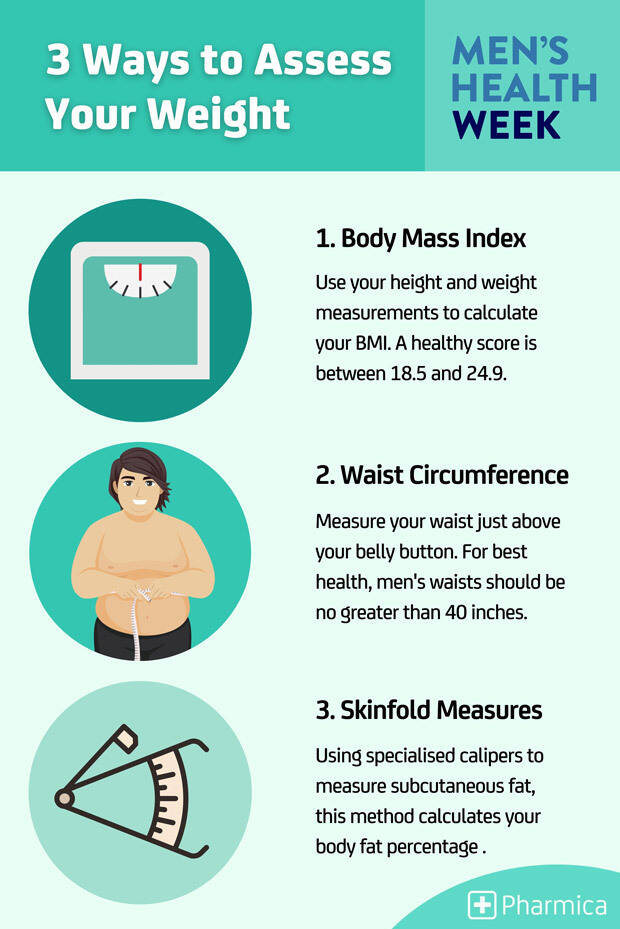
If your Body Mass Index suggests your weight isn't in a healthy range (typically 18.5 to 24.9), it might be time to think about weight loss options. A higher BMI can increase your risk for health issues like heart disease and diabetes.
Sometimes, diet and exercise aren't enough. That's where weight loss injections like Wegovy and Mounjaro come in. These medications work by helping you feel fuller and eat less, leading to significant weight loss.
Wegovy has helped people lose around 15% of their body weight on average.
Mounjaro (which may be even more effective) has shown an average weight loss of 15% to 22.5%.
Always talk to your doctor before starting any weight loss treatment. They can help decide if these options are right for you and ensure you use them safely alongside healthy eating and activity.